The automotive aftermarket isn’t exactly known for embracing change. Whether we like it or not, we have a reputation of being "behind the times" and as a result, it’s easy to cling to the old ways: until reality us with the cost of stagnation.
Well, 2026 is on our doorstep. The game is changing (finally), and those of us in the trenches (aftermarket execs, forward-thinking distributors, startup folks selling into this complex space) can’t afford to hit the snooze button any longer.
I’ve been around this block a few times, and I’ll be the first to say: the next year is make-or-break for those still on the fence about modernizing.
In classic aftermarket fashion, we’re being squeezed from all sides: unpredictable inventory, new tech hype, aging vehicles, digital upstarts, and a exiting talent. Sound familiar? The difference now is that these pressures have hit a boiling point.
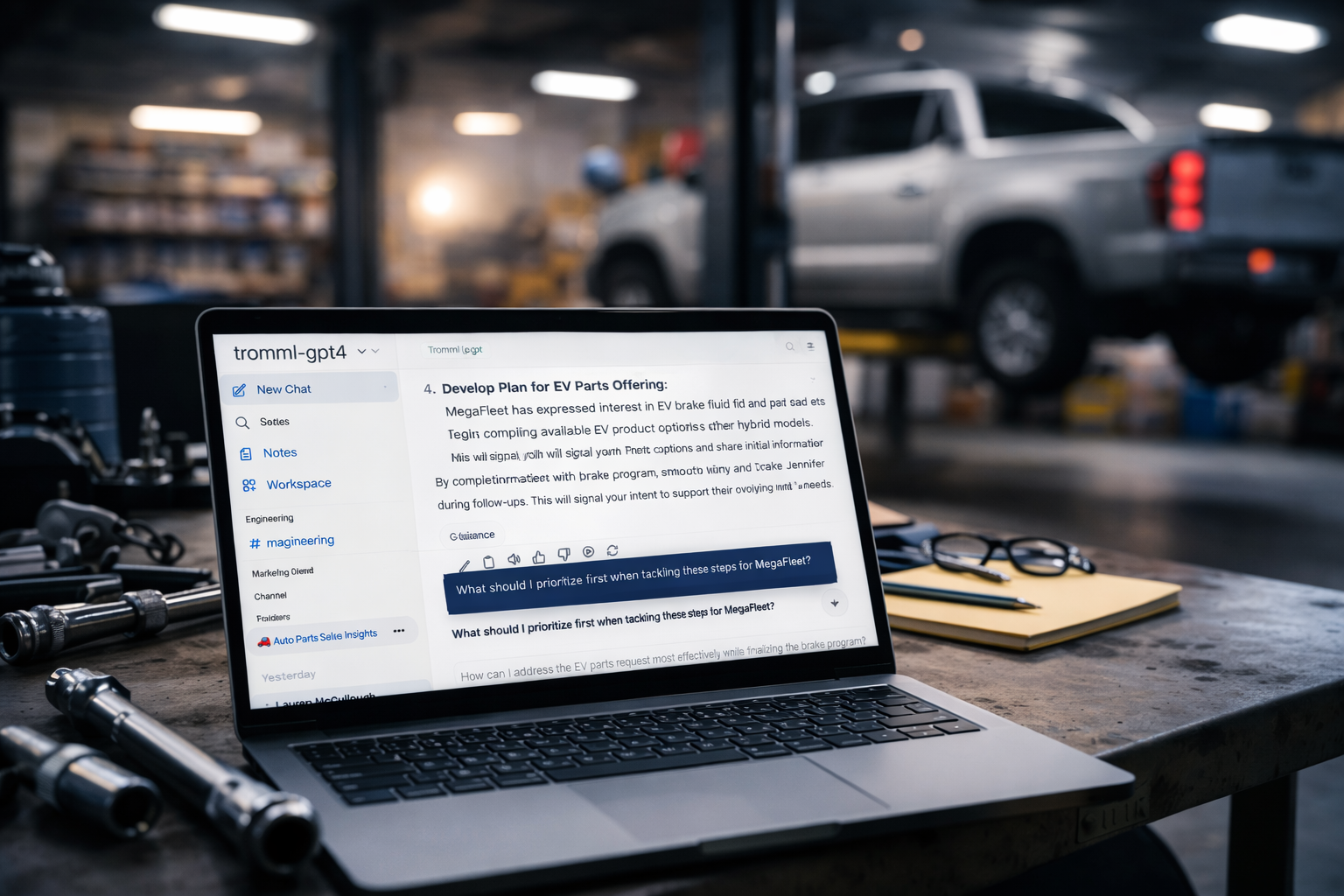
The good news? Where there are problems, there are opportunities for the sharp operators ready to act. Below, I’ll break down the top five aftermarket trends for 2026 and how Tromml’s Minecart platform is directly addressing each one.
This industry was built on relationships and it still runs on them. But in today’s world, showing up with donuts isn’t enough. The shops you serve are under pressure, too. They expect speed, precision, and follow-through. And they expect their reps to understand their business, not just take orders.
How Minecart is helping: We help reps capture what they’re hearing in the field – the exact language, pain points, and shifts happening on the ground. That gets shared with the broader team so everyone from sales managers to purchasing to leadership – has a pulse on what’s changing and how to respond. It's how we turn field relationships into strategic assets. The goal isn’t to replace the rep. It’s to amplify them.
We’ve all seen it: reps hustling day to day, managers buried in spreadsheets or stuck reacting to fires. When coaching happens, it’s often months too late. In 2026, reactive management just doesn’t cut it anymore.
How Minecart is helping: Minecart gives managers visibility into what’s actually happening out in the field without waiting for end-of-month reports or CRM updates that never show up. We surface signals early: who’s losing traction with key accounts, which reps are spotting emerging issues, where pricing or supply pain is bubbling up. This gives managers something to coach with concrete insights instead of generic advice.
It’s about turning managers into coaches again, not just data chasers. And it’s about making every rep better, faster.
Nobody got into sales because they love filling out forms. But most aftermarket reps are spending hours every week typing in notes, updating systems, or writing emails to try and share what they’re seeing. Multiply that by every rep and every call, and you’ve got a huge drag on the business.
How Minecart is helping: We cut through the noise. Minecart gives reps a lightweight way to capture intel quickly—voice, text, shorthand—and gets it where it needs to go. It’s built to work the way reps already work. No extra dashboards. No duplicate entry. Just smart tools that reduce admin and increase time spent in front of the customer.
The result? More field time. Less burnout. More clarity across the business.
Your veteran reps know things that your systems never will. They’ve got context, nuance, instincts. But when they retire—or move on—that knowledge often walks out the door. Onboarding a new rep? You’re starting from scratch. That’s a problem.
How Minecart is helping: We make knowledge transfer part of the process. By capturing what reps are hearing, learning, and sharing in real time, we build a living, searchable record of what’s happening in your market. That’s a goldmine for onboarding new team members, training rising stars, and keeping continuity across customer relationships.
It also means your team doesn’t have to keep relearning the same lessons every quarter. The learning compounds—and so does your advantage.
A lot of software in this space was built to serve finance or ops. Not the field. And it shows. Tools that were supposed to make things easier end up creating more friction, more boxes to check, and more reasons for reps to disengage.
How Minecart is helping: We designed Minecart to be invisible in the best way. It fits into the rhythms of the day instead of dictating them. It shows up with suggestions, reminders, and insights when they’re actually helpful—not just when a report is due. We’re not building for screen time—we’re building for momentum.
At Tromml, we’re not betting on tech to replace relationships. We’re betting on tech to strengthen them. We believe the people closest to the customer have the sharpest insights. We believe that intelligence should move freely, not get trapped in silos. And we believe that when you respect people’s time and attention, they do their best work.
That’s what Minecart is all about. Let’s get to work.
Read FREE Tromml's eBook on how AI is changing work in aftermarket parts distribution.



%401x.svg)